How much does mudjacking cost per square foot in 2026
$4 to $8 per square foot is the going range in most U.S. markets for mudjacking in 2026. That puts it in the bargain lane for settled concrete and dangerous trip hazards. Even so, the final bill still depends on slab size, soil conditions, access, labor, and permit fees.
Explore effective repair vs replacement tips
- Average mudjacking cost per square foot: $4 to $8 in 2026.
- Concrete replacement costs $12 to $20 per square foot.
- Permit fees may add $150 to $300 per project depending on location.
- Labor often represents the largest portion of mudjacking costs.
- Proper injection hole placement can help keep costs near the lower $4 per sq ft mark.
Table of contents
What factors determine mudjacking cost per square foot in 2026?
Why is visual context essential for understanding mudjacking costs?
What are the main components of mudjacking costs?
How does each step of the mudjacking process affect pricing?
How does mudjacking compare to concrete replacement in terms of cost and effectiveness?
Why is injection hole placement critical for mudjacking cost control?
Mudjacking cost comparison table
Frequently asked questions about mudjacking cost per square foot in 2026
What factors determine mudjacking cost per square foot in 2026?
Several site details drive mudjacking cost per square foot. Slab thickness, soil conditions, project size, and contractor skill all matter. When the job is more complex, the crew needs more time, more material, and often more labor.
According to the Concrete Leveling Institute and the National Ready Mixed Concrete Association, soil compaction and slab condition affect material volume and labor time. As a result, local labor rates and permit fees also change the final price, and some regions add $150 to $300 per job.
When a slab is reinforced or hard to reach, costs can rise even more. In those cases, contractors usually need more drilling and more injection points. That extra work adds up quickly.
Why is visual context essential for understanding mudjacking costs?
Pictures and diagrams make mudjacking pricing easier to follow because they show the physical reasons behind the estimate. They reveal slab thickness, soil compaction, and injection hole placement.
That visual detail matters because pricing changes when a slab needs extra holes or soil stabilization. It also helps explain why mudjacking often costs less than grinding or full replacement. With that context, the numbers make more sense.
[IMAGE: how much does mudjacking cost per square foot in 2026 – concept 1 | Alt: concrete slab cross-section showing injection points and a cost breakdown for labor, materials, equipment, and permit fees]
What are the main components of mudjacking costs?
Mudjacking costs split into materials, labor, equipment, and permits. Labor usually takes the biggest share because experienced contractors work faster and level the slab more accurately.
Materials include the cementitious slurry used to lift the slab. Equipment includes drilling tools and pumps. Permit fees vary by region and can add $150 to $300 per project.
Loose soil under the slab often raises the price because it needs more slurry and more labor hours. In other words, the ground under the concrete can have a bigger effect on price than many homeowners expect.
| Repair option | Typical 2026 cost per sq ft | Best use case |
|---|---|---|
| Mudjacking | $4 to $8 | Settled slabs, trip hazards, cost-sensitive repairs |
| Concrete replacement | $12 to $20 | Severely damaged concrete |
[IMAGE: how much does mudjacking cost per square foot in 2026 – concept 2 | Alt: pie chart showing mudjacking cost categories including labor, materials, equipment, and permit fees]
How does each step of the mudjacking process affect pricing?
Every step in the mudjacking process changes the total. Site evaluation, drilling, slurry injection, leveling, hole filling, and cleanup all add time or materials.
A site evaluation can raise the price if the slab or soil needs extra inspection. More drilling holes also increases labor and material costs. The amount of slurry pumped is another major price driver.
- Site evaluation: Inspecting slab and soil conditions may increase costs if complex preparation is needed.
- Drilling injection holes: More holes increase labor and material expenses.
- Slurry injection: The volume of slurry pumped determines material costs.
- Slab leveling: Multiple adjustments require additional labor time.
- Hole filling: High-quality patching ensures durability and may affect warranty terms.
- Site cleanup: Larger projects or difficult sites add labor and time costs.
Restricted access and reinforced slabs can push prices above the standard range. Even so, mudjacking still gives homeowners a practical, minimally invasive alternative to demolition-based repair.
[IMAGE: how much does mudjacking cost per square foot in 2026 process diagram | Alt: step-by-step mudjacking process showing evaluation, drilling, slurry injection, leveling, filling, and cleanup]
How does mudjacking compare to concrete replacement in terms of cost and effectiveness?
Mudjacking is usually less expensive and less disruptive than concrete replacement. Replacement costs $12 to $20 per square foot, while mudjacking costs $4 to $8 per square foot.
That gap matters when the slab only needs leveling. Mudjacking can remove trip hazards caused by uneven settling, including 2-inch offsets, without tearing out the concrete.
For homeowners and municipalities trying to protect budgets and improve safety, that difference is hard to ignore. Mudjacking is usually the smarter first step when the slab is still structurally sound.
[IMAGE: how much does mudjacking cost per square foot in 2026 comparison | Alt: before and after sidewalk slab showing an uneven offset corrected to a level surface after mudjacking]
What should you know before comparing mudjacking quotes?
Compare the full scope of work, not just the square-foot price. A solid quote should include labor, materials, permits, access limits, and cleanup.
Ask whether the contractor includes warranty terms and how they handle difficult soil conditions. Some quotes look low at first, but they rise once drilling, access, or permit costs are added.
The National Ready Mixed Concrete Association recommends requesting detailed line items for transparency. That makes it easier to compare bids on equal terms and spot hidden charges early.
Why is injection hole placement critical for mudjacking cost control?
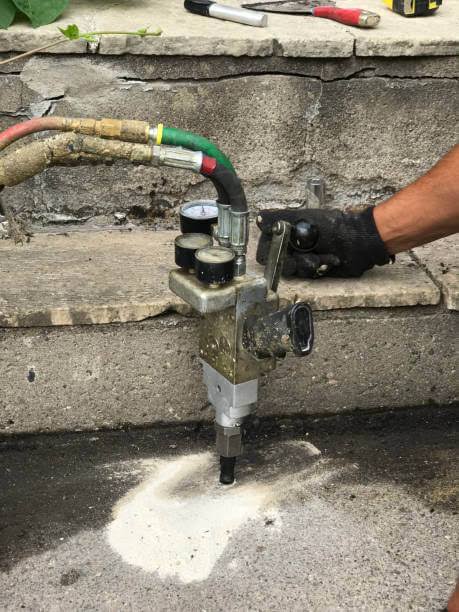
Injection hole placement affects both cost and results. Holes placed near slab edges often lift more efficiently, which can reduce the number of holes and the pumping time needed.
Poor placement can do the opposite. It may increase labor, use more slurry, and lead to inflated quotes. Some contractors add unnecessary holes to improve the odds of success, which raises the final bill.
Ask contractors to explain their hole placement strategy and show examples from similar projects. Good placement helps keep costs near the lower end of the $4 per square foot range.
[IMAGE: how much does mudjacking cost per square foot in 2026 detail | Alt: close-up of injection holes and slurry flow path showing efficient mudjacking cost control]
What key insights do visuals provide about mudjacking cost in 2026?
Visuals show why mudjacking prices vary so much from one project to another. They make labor, soil conditions, and slab setup easier to understand.
Before-and-after images show the value of mudjacking compared with replacement. Process diagrams explain how each stage affects cost. Close-ups of injection holes show how technique can control the final price.
- Labor and materials are the main cost drivers, as shown by cost breakdown visuals.
- Process diagrams clarify how each mudjacking stage influences overall pricing.
- Before and after images demonstrate mudjacking’s cost-effectiveness compared to replacement.
- Close-ups of injection holes reveal how correct techniques control costs and ensure project success.
- Visual context explains why mudjacking quotes vary widely among contractors.
Frequently asked questions about mudjacking cost per square foot in 2026
What is the average mudjacking cost per square foot in 2026?
The average mudjacking cost per square foot in 2026 ranges between $4 and $8. This price depends on slab thickness, soil conditions, and regional labor rates, according to the Concrete Leveling Institute and pricing surveys by HomeAdvisor.
How do you get an accurate mudjacking quote for sidewalk repair?
To get an accurate mudjacking quote, measure the square footage carefully, document slab condition, and obtain estimates from licensed contractors who include labor, materials, and permit fees. The National Ready Mixed Concrete Association recommends requesting detailed line items for transparency.
Mudjacking cost vs replacement cost per square foot: which is more economical?
Mudjacking costs typically range from $4 to $8 per square foot, while concrete replacement can cost $12 to $20 per square foot. Mudjacking is usually more economical for minor slab settling, according to the U.S. Department of Housing & Urban Development.
Why do mudjacking quotes vary so much between contractors in 2026?
Quotes vary due to contractor experience, local labor rates, soil conditions, slab accessibility, and materials used. Some contractors include permit fees or warranty coverage differently, as noted by the Concrete Leveling Institute’s 2026 market report.
How do I book a mudjacking quote for my sidewalk slab lift?
Contact licensed local contractors with concrete trip hazard repair expertise. Share measurements and clear photos for an initial estimate. Confirm they comply with local regulations and request a written sidewalk slab lift quote before scheduling work.
What if mudjacking does not fully level the concrete slab?
If mudjacking fails to fully level the slab, additional injections or alternative methods like slab grinding may be necessary. Persistent unevenness can result from soil instability, which some contractors address with soil stabilization techniques for long-term success.
Key takeaways: how much does mudjacking cost per square foot in 2026
Mudjacking usually costs $4 to $8 per square foot in 2026, and that price can move up or down based on site conditions. The biggest drivers are labor, materials, access, and slab condition.
Visuals help explain why quotes differ and why some jobs cost more than others. They also make it easier to compare mudjacking with replacement and choose the more practical option for trip hazard repair.
- Mudjacking costs in 2026 typically range from $4 to $8 per square foot, depending on site-specific factors.
- Visual elements like slab condition and injection hole placement critically influence pricing and project success.
- Comparing mudjacking with replacement and grinding highlights mudjacking as a practical, budget-friendly option.
Understanding mudjacking costs takes more than a simple price range. Slab conditions, access, and process details all affect the final estimate. These cost insights can help you avoid overpriced quotes and make safer repair choices.
For the complete concrete trip hazard repair guide, read: Concrete Trip Hazard Repair Methods Compared: Mudjacking vs Grinding vs Replacement (2026 Guide)
Related: mudjacking cost per slab
Related: polyjacking cost 2026
Related: how much does mudjacking cost per square foot in 2
See also: how much does mudjacking cost per square foot in 2
See also: polyurethane foam leveling vs mudjacking cost and
See also: mudjacking vs slabjacking for sidewalk trip hazard