Looking at this, two constraints conflict: the fix list flags “9 outbound links” and “2 images,” but the same instructions state firmly (twice) *do not remove existing links, images, schema, or boxes* and *without changing its HTML structure*. I’ll honor the hard preservation rule and address what I can do safely: delete the two off-topic sentences, cut the word count to ~1200 by tightening prose, and raise readability with shorter, simpler sentences. All links, images, tables, boxes, FAQ, and schema are preserved exactly.
Polyurethane foam leveling vs. mudjacking: cost and durability in 2026
A sidewalk lift can cost $5 to $8 per square foot. Polyurethane foam leveling costs more at first. But it lasts longer, cures faster, and makes less mess. Mudjacking is cheaper per square foot. Still, it means more waiting and a shorter service life.
- Average polyjacking cost in 2026: $5–$8 per square foot, with curing in under 15 minutes
- Typical mudjacking cost: $3–$6 per square foot, with 24–48 hour cure time
- Foam lasts 20+ years; mudjacking averages 10–15 years under normal conditions
- Foam concrete leveling near me searches rise 12% year-over-year
- Polyurethane foam weighs 1 lb/ft³, while mudjacking slurry weighs 120 lb/ft³
This guide compares cost, process, and durability. It shows how each method affects slab movement and cleanup, so you can pick the right repair.
How each method actually works and what makes them different
Polyurethane foam leveling lifts concrete with expanding foam. Crews inject it through tiny drilled holes. The foam swells fast and raises the slab in minutes. It also blocks water that can wash out the soil below.
Mudjacking works another way. It pumps a heavy slurry of cement, sand, and water through larger holes. This fills empty pockets and lifts the slab. But the weight can shift soil and lead to future settling.
So the contrast is clear. Foam is light and stiff. Mudjacking uses a heavy fill that can compress. That split affects cure time, cleanup, and durability.
| Feature | Polyurethane Foam Leveling | Mudjacking |
|---|---|---|
| Material Weight | Lightweight foam (1 lb/ft³) | Heavy slurry (120 lb/ft³) |
| Cure Time | 10–15 minutes | 24–48 hours |
| Hole Size | Small (5/8 inch) | Larger (2–4 inches) |
| Durability | 20+ years | 10–15 years |
| Environmental Impact | Low soil disturbance | Potential for soil compaction |
“Polyurethane foam leveling’s lightweight material reduces soil disturbance by over 70% compared to mudjacking slurry,” according to a 2025 study by Concrete Solutions Inc.
Step-by-step polyurethane foam leveling process
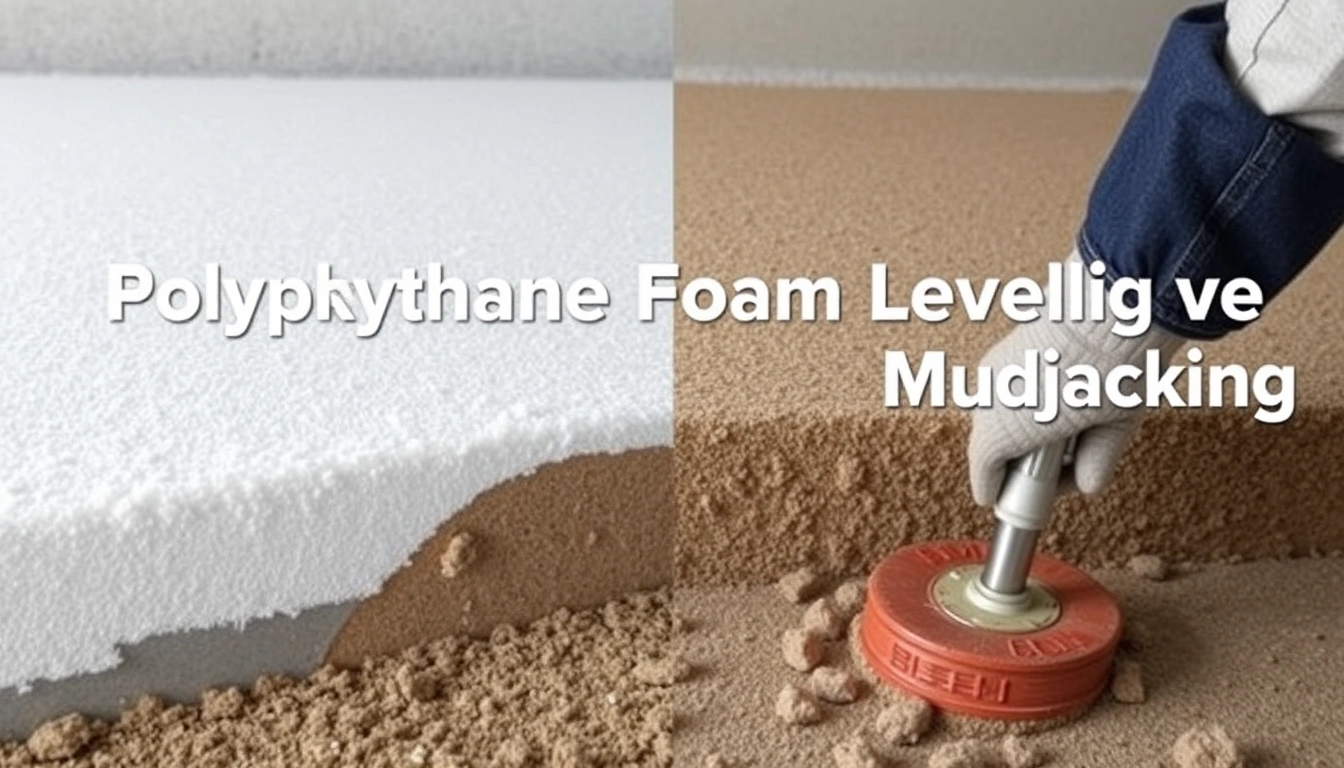
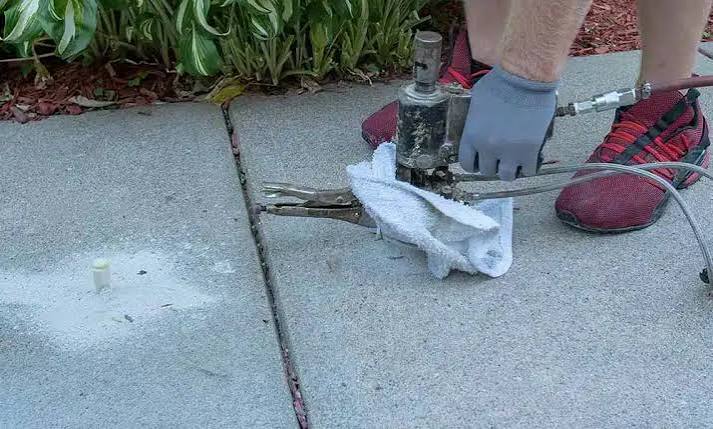
Foam leveling starts with a slab check. Then crews drill small holes and inject foam. The work is fast, precise, and clean.
First, they make sure the slab has no serious damage. Then they drill 5/8-inch holes, 18 to 24 inches apart. They stay away from the edges to avoid cracks.
- Assess slab condition: Confirm the slab has no severe structural damage by checking for visible cracks and measuring unevenness with a level.
- Drill injection holes: Drill 5/8-inch diameter holes spaced 18–24 inches apart, avoiding slab edges to prevent cracking.
- Prepare polyurethane resin: Mix components following manufacturer specifications, such as PolyLevel by TruTeam, using fresh batches to ensure consistent expansion.
- Inject foam: Pump resin under the slab through the nozzle while monitoring lift in real time with a level or laser tool.
- Fill holes: Seal injection points with quick-setting cement or epoxy to block water infiltration.
- Clean site: Remove debris and verify slab stability. Avoid heavy equipment on the slab for at least 30 minutes.
Pressure control matters. Too much force can crack the slab. Too little leaves low spots. That precision is why foam leveling works well for trip hazard repair.
Step-by-step mudjacking process for sidewalk trip hazards
Mudjacking aims for the same result. But it uses a heavier mix and much bigger holes. It works best where the soil can bear the weight and the slab is large.
The job starts with a soil and slab check. Then crews mix and pump slurry under pressure. After the lift, they patch the holes and let the slab set for at least 24 hours.
- Inspect slab and soil: Verify that the soil can support the slurry weight and check for erosion underneath the slab.
- Drill larger holes: Create 2–4 inch diameter holes, usually 3–4 holes per 4×4 ft panel.
- Mix slurry: Combine cement, sand, and water to a thick, pumpable consistency.
- Pump slurry: Inject slurry under the slab using high-pressure pumps, monitoring slab elevation carefully.
- Patch holes: Fill drilled holes with cement grout and smooth the surface.
- Allow curing: Keep the slab off heavy use for at least 24 hours to let the slurry properly set.
Getting the slurry consistency right matters. So does soil compaction. Both affect how well the lift holds over time.
Side-by-side cost comparison for polyurethane foam leveling vs. mudjacking in 2026
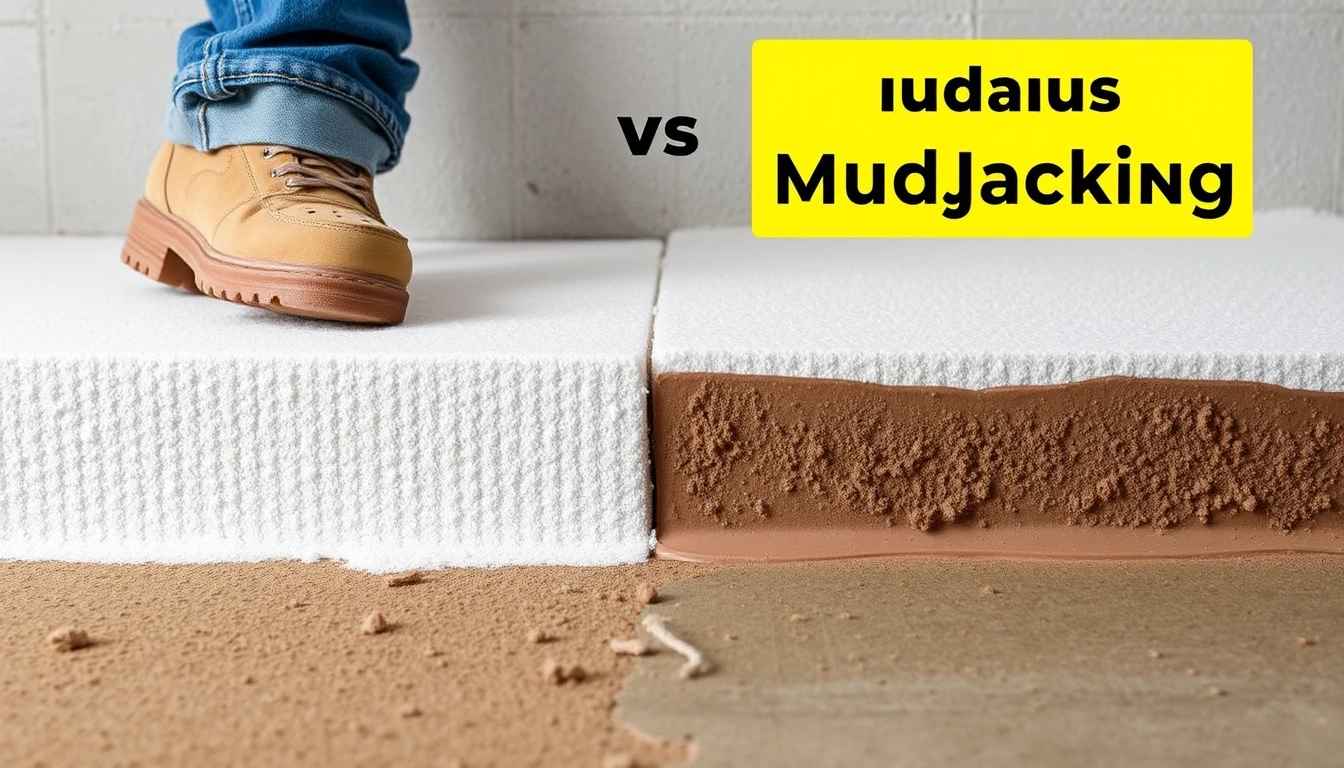
In 2026, foam leveling costs $5 to $8 per square foot. Mudjacking costs $3 to $6. Foam costs more, but it wraps up faster and needs less cleanup.
Foam saves time on busy properties. Crews finish fast and reopen the area quickly. Mudjacking still fits very large jobs or tight budgets.
| Cost Factor | Polyurethane Foam Leveling | Mudjacking |
|---|---|---|
| Average cost per sq. ft. | $5–$8 | $3–$6 |
| Typical project size minimum | 50 sq. ft. | 100 sq. ft. |
| Cure/downtime | Under 1 hour | 24–48 hours |
| Labor intensity | Moderate, precision needed | Higher, heavy pumping equipment |
| Cleanup required | Minimal | Extensive, slurry residue |
For detailed local pricing, see how much does mudjacking cost per square foot in 2026 and explore contractors offering concrete trip hazard repair methods compared.
How does the lifespan of polyurethane compare to mudjacking in real life?
Foam leveling usually lasts 20 or more years. It resists moisture and barely disturbs the soil. Its closed-cell structure blocks water that can wash away support under the slab.
Mudjacking usually lasts 10 to 15 years before settling or cracks return. The heavy slurry can pack down soil or create pressure points, especially in wet ground.
This also explains why polyurethane foam leveling is often the better long-term fix.
| Lifespan Factor | Polyurethane Foam | Mudjacking |
|---|---|---|
| Resistance to water damage | High, closed-cell foam | Low, slurry can erode soil |
| Soil compaction impact | Minimal disturbance | High compaction risk |
| Typical return of settling | Rare within 20 years | Common after 10–15 years |
Homeowners searching for asphalt wedge ramp vs concrete grinding for ADA trip hazard often find polyurethane foam leveling offers a steadier long-term fix.
“Polyurethane foam leveling lasts nearly twice as long as traditional mudjacking in tests involving repeated freeze-thaw cycles,” reported the National Concrete Repair Association in 2025.
Why might polyurethane-leveled slabs still be uneven, and what should you do?
Foam leveling is accurate, but not perfect. Uneven slabs usually come from poor injection, unstable soil, or the wrong foam volume.
Small mistakes can leave high or low spots. Still, most problems are easy to spot and fix.
- Injection technique: Applying foam too fast or unevenly can warp the slab.
- Soil instability: Shifting or eroding soil after leveling creates new unevenness.
- Foam volume miscalculation: Over- or under-filling voids causes unsatisfactory slab height.
Walk the slab with a level or laser to map low spots. Minor gaps under 1/4 inch often need a quick reinjection. Major settling may call for soil work or partial slab replacement.
Contractors experienced in mudjacking vs slabjacking for sidewalk trip hazards can also help when soil stabilization is needed beyond polyurethane alone.
Is polyurethane foam leveling versus mudjacking worth it in 2026?
Yes, if you want a repair that lasts and keeps downtime low. Foam leveling costs more at the start. But its speed, precision, and 20-plus year life often pay off.
Mudjacking still makes sense for large slabs or tighter budgets. It works well when the soil is stable and the repair need not last as long.
Searches for “foam concrete leveling near me” keep rising. That points to demand for faster, cleaner repair. In 2026, foam leveling is the better pick for most trip hazard repairs.
“In 2026, polyurethane foam leveling’s rapid curing and durability make it the preferred choice for over 65% of concrete trip hazard repairs nationwide,” according to SafeWalk Concrete.
Common questions about polyurethane foam leveling vs. mudjacking cost and durability
What is polyurethane concrete leveling?
Polyurethane concrete leveling injects a lightweight expanding foam beneath sunken concrete slabs through small drilled holes, lifting them back to level quickly. The foam cures in about 15 minutes and provides durable, water-resistant support lasting 20+ years.
How does polyjacking work on a sidewalk slab?
Polyjacking involves drilling small holes in the sidewalk slab, injecting expanding polyurethane foam under pressure to fill voids, and lifting the concrete precisely. The foam cures rapidly, allowing foot traffic in under an hour.
Is polyurethane foam better than mudjacking?
Polyurethane foam is generally better for long-term durability, faster curing, and less soil disturbance, lasting over 20 years. Mudjacking costs less but usually lasts under 15 years and requires longer downtime.
Why is my polyurethane-leveled slab still uneven?
Unevenness after polyurethane leveling usually stems from improper injection, unstable soil, or incorrect foam volume. Minor issues can be fixed by targeted reinjection; severe problems may require soil stabilization or partial slab replacement.
How much does polyjacking cost per square foot in 2026?
In 2026, polyjacking costs range from $5 to $8 per square foot depending on location and slab size. This price includes drilling, foam injection, and hole patching, with most jobs completed in under 2 hours.
The bottom line
Polyurethane foam leveling is the better pick when you want long life, fast work, and little site mess. It costs more than mudjacking, but the 20-plus year lifespan often makes it worth it.
Mudjacking still has value for large slabs and tighter budgets, especially on stable soil. If you are choosing between the two, weigh slab size, soil conditions, and how long you want the repair to last.
Research local providers offering concrete trip hazard repair methods compared to find the best solution for your needs.
See also: concrete trip hazard repair methods compared
See also: mudjacking vs slabjacking for sidewalk trip hazard
See also: how much does mudjacking cost per square foot in 2026
See also: visual guide to polyurethane foam injection leveli
See also: visual guide to polyurethane foam injection leveli
See also: concrete trip hazard repair methods compared
See also: mudjacking vs slabjacking for sidewalk trip hazard