“`html
Concrete Grinding vs Full Slab Replacement for Trip Hazard: What’s Best in 2026
In 2026, concrete grinding is usually the faster, cheaper fix for minor height differences, while full slab replacement makes more sense for severe displacement, major cracking, or slab failure. A 2-inch lip in a sidewalk may seem small, but it can still create a serious trip risk and trigger a costly repair decision. Choosing between the two depends on the slab’s condition, the size of the hazard, and how long you want the repair to last.
- Concrete grinding projects average $6–$12 per square foot in 2026.
- Full slab replacement costs about $18–$45 per square foot.
- Grinding usually takes 2–6 hours per 100 square feet.
- Replacement typically takes 1–3 days, including curing time.
- Grinding usually lasts 5–7 years, while new slabs can last 20+ years.
The real difference between concrete grinding and full slab replacement
Concrete grinding trims down the high spot by shaving the raised concrete surface. Full slab replacement tears out the whole damaged panel and pours a new one in its place.
Grinding is best for a localized trip hazard. Replacement is better when the damage runs deeper. Grinding uses diamond blades to shave concrete and create a smoother slope. By contrast, replacement includes demolition, hauling, and pouring fresh concrete.
For a trip hazard in 2026, concrete grinding usually averages $6–$12 per square foot and often finishes in just a few hours for smaller sections. Full slab replacement can cost $18–$45 per square foot and usually takes 1–3 days, including curing time.
“Grinding fixes trip hazards under 2 inches high in hours at $6–$12 per square foot, while full replacement is for deeper problems costing 3-5x more.” – Concrete Repair Institute, 2026
Who should actually use concrete grinding?

Use concrete grinding when the trip hazard is small, the slab still has solid bones, and cost or downtime is the main concern. It fits small sidewalk runs, driveways, and patios where most of the concrete is fine but one edge has popped up.
Because the work is limited to the raised edge, it can solve the problem quickly without the disruption of demolition. That makes it a strong option for property owners who need a practical fix and do not want to replace good concrete unnecessarily.
Best-fit situations for grinding
Go with grinding for hazards under 2 inches if the slab has no major structural damage. It also makes sense when you want a quick repair that typically costs less than replacement.
- Cost-effective: Sidewalk grinding cost typically stays under $500 for one slab.
- Fast: Many repairs finish in less than a day.
- Durable enough for minor issues: Results often last 5–7 years under normal foot traffic.
When grinding should not be used
Grinding is the wrong tool when cracks run past the repair zone or when the slab has settled unevenly. It can also be risky if the cut leaves a slope that becomes a fresh trip point.
- Not suitable for slabs with cracks extending beyond the grinding area.
- Not enough for slabs raised more than 2 inches or slabs that have settled unevenly.
For owners who need a fast, low-cost fix, this method usually delivers the best value. If you want a related alternative, see asphalt wedge ramp vs concrete grinding for ADA trip hazard.
When full slab replacement wins
Full slab replacement is the right call when the slab has severe vertical displacement, wide cracks, or deterioration that grinding cannot safely solve. It is also the better route when soil settling, erosion, or other underlying problems must be addressed.
In those cases, replacing the whole panel is more than a cosmetic fix. It removes the failed section and gives you a level, stable surface again, which can be the better choice when structural integrity is already compromised.
Why replacement is the stronger fix
- Longevity: New slabs can last 20+ years with proper installation.
- Structural integrity: It addresses subsurface problems like soil settling or erosion.
- Clean finish: It provides a new surface that can be finished as needed.
Trade-offs to expect
- Higher cost: Replacement costs about $18–$45 per square foot.
- Longer timeline: The work usually takes 1–3 days, including curing.
- More waste: It creates more debris and uses more material than grinding.
Replacement is especially useful for commercial properties, municipalities, and homeowners dealing with serious safety risks. It is also preferred when self-leveling concrete patch vs professional slab lifting is not enough because the slab condition is too far gone.
The honest side-by-side comparison

Grinding saves money and time, while replacement gives you a longer-lasting structural fix. The right pick comes down to how damaged the slab is and how much disruption you can manage.
Grinding is the better short-term value for small, isolated hazards, while replacement is the safer long-term choice when the slab itself is failing.
| Criteria | Concrete Grinding | Full Slab Replacement | Winner for condition |
|---|---|---|---|
| Trip hazard height fixed | Up to 2 inches | Any height | Grinding for ≤2 inches; replacement for >2 inches |
| Average cost per square foot | $6–$12 | $18–$45 | Grinding for budgets under $1,000 |
| Repair time | 2–6 hours per 100 sq ft | 1–3 days including curing | Grinding for quick fixes |
| Longevity | 5–7 years | 20+ years | Replacement for lasting solutions |
| Slab integrity addressed | No | Yes (foundation and soil issues) | Replacement when underlying issues exist |
| Disruption to use | Low | High (demolition and curing) | Grinding for minimal disruption |
| Environmental impact | Low (material shaved off on-site) | High (waste concrete disposal) | Grinding |
| Risk of new trip hazard after repair | Medium (depends on precision) | Low | Replacement for risk-averse |
| Best for | Minor, localized hazards | Severe hazards, cracked or displaced slabs | Depends on slab condition |
Is concrete grinding vs full slab replacement worth it in 2026?
Concrete grinding still makes sense in 2026 for many residential and light commercial trip hazards because it is inexpensive and fast. It provides solid value when the slab is still sound and the problem is just a raised edge.
However, it becomes a poor choice when the slab is already failing below the surface. While grinding can save hundreds of dollars, if the concrete is cracking or moving, it may create a new trip hazard instead of fixing the old one.
If cracks extend beyond 12 inches or vertical displacement exceeds 2 inches, replacement is often the smarter long-term decision despite the higher upfront cost. That is the point where the repair choice usually becomes clear.
“Grinding trip hazards in 2026 saves time and money but must be avoided on slabs with cracks longer than 12 inches or over 2-inch displacement.” – Cement Repair Council Report
When to reconsider this choice entirely
Sometimes neither grinding nor full replacement is the right answer. For some slabs, lifting or patching solves the issue with less disruption and better value.
Reconsider your options if the slab is settling unevenly, the hazard is minor, or you want to avoid dust and noise. In those cases, another repair method may fit better.
- If the slab has uneven settling but an intact surface, slab lifting may be the better fix.
- If you want to avoid dust and noise, asphalt wedge ramps can be a cleaner option for ADA compliance in some cases.
- If the budget is very tight and the hazard is small, a self-leveling concrete patch may work temporarily.
Picking the wrong method can lead to higher costs over time—especially if the soil or slab keeps moving. Therefore, checking slab condition and soil stability first helps avoid repeat repairs.
Common questions about concrete grinding vs full slab replacement for trip hazard
What is concrete grinding for trip hazards?
Concrete grinding removes raised concrete sections with diamond blades to reduce or eliminate a trip hazard. It usually works for hazards up to 2 inches high and costs about $6–$12 per square foot in 2026.
How is a sidewalk trip hazard ground down safely?
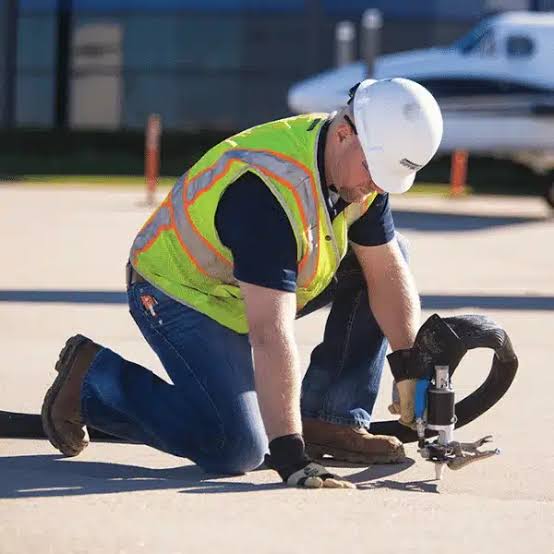
A professional uses a diamond blade grinding machine to carefully shave the raised edge, ensuring a proper slope and managing dust throughout the process.
Which is cheaper long term, grinding or replacement?
Grinding costs less upfront, but it usually lasts only 5–7 years. Full slab replacement costs 3–5 times more, but it can last 20+ years, so it is often better for serious damage.
Why does grinding sometimes leave a new trip hazard?
Grinding can create a new hazard if the slope is uneven or if cracks spread after the repair. That risk rises when the slab has hidden damage beyond the visible high spot.
How much does it cost to grind a sidewalk trip hazard?
Sidewalk grinding cost in 2026 usually ranges from $6 to $12 per square foot. Small repairs under 100 square feet often total under $500.
The bottom line
Choose concrete grinding if the trip hazard is under 2 inches, the slab has no major cracks, and you want a fast fix that lasts about 5–7 years. Choose full slab replacement if the displacement is over 4 inches, the slab is heavily cracked, or you want a durable 20+ year solution.
If soil erosion or slab sinking is still active, neither method is enough on its own. Start by measuring the vertical displacement and checking for cracks longer than 12 inches. If those conditions fit the grinding limits, call a professional this week.
For a broader comparison of repair methods, review concrete trip hazard repair methods compared before you decide. The right concrete grinding vs full slab replacement for trip hazard choice depends on the slab, the safety risk, and the repair life you want.
See also: concrete trip hazard repair methods compared
See also: asphalt wedge ramp vs concrete grinding for ADA tr
See also: when grinding alone won’t fix a trip hazard
“`
See also: how to choose between grinding, mudjacking, or ful
See also: concrete trip hazard repair methods compared
See also: step by step photos of concrete grinding a trip ha