When grinding alone won’t fix a trip hazard
A 2.5-inch sidewalk lip is not a grind-and-go job. When the concrete offset is too large or the slab is too thin, shaving the surface can leave part of the hazard in place or damage the slab itself. That is why the right fix depends on offset depth, slab thickness, and site conditions.
Discover effective repair options here
- Grinding is effective only for offsets up to approximately ¾ inch without damaging the slab.
- Sidewalk offsets exceeding 2 inches usually require mudjacking or replacement.
- Concrete slabs thinner than 3 inches risk cracking if ground.
- Alternative repairs like mudjacking cost between $3 and $8 per square foot; full replacement ranges from $8 to $15 per square foot.
- Grinding deeper than ¾ inch violates ASTM and ACPA guidelines and can cause slab damage.
What does it mean when grinding alone won’t fix a trip hazard?
It means the concrete cannot be leveled safely by removing surface material alone. The offset is too deep, the slab is too thin, or both. In that situation, grinding alone won’t fix a trip hazard without leaving a lip behind or weakening the concrete.
American Concrete Institute (ACI) and ASTM standards cap grinding at about ¾ inch. Slabs thinner than 3 inches add risk, plain and simple. When offsets go beyond 2 inches, grinding may miss the hazard entirely and still damage the slab.
Why does grinding alone fail on deeper concrete offsets?
Grinding alone fails because it removes concrete instead of lifting it. Once the offset passes the safe removal limit, the repair either leaves a hazard behind or cuts too far into the slab. That is the core limitation.
Offsets above ½ to ¾ inch usually push past practical grinding limits. If the difference is large, the surface can still be uneven after the work is done. That is why grinding is a poor fit for serious sidewalk lifts.
How do grinding limits and concrete offset depths affect trip hazard repairs?
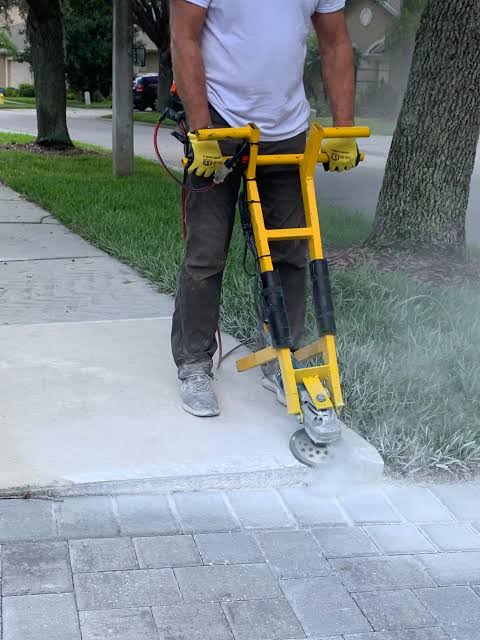
Grinding can safely remove only a limited amount of concrete, usually about ¾ inch. If the offset is larger, grinding alone won’t fix a trip hazard because the height gap still remains. A 2.5-inch offset is far outside that range.
Slab thickness matters just as much. Slabs of 4 inches or more are generally safer to grind, while slabs thinner than 3 inches can crack or break. The American Concrete Pavement Association (ACPA) and ASTM support those limits.
[IMAGE: Concrete sidewalk showing a 2.5-inch offset and slab thickness, demonstrating grinding removal limits and why deeper offsets can’t be corrected by grinding alone]
What are the steps to assess trip hazards and choose the right repair method?
A simple inspection process helps determine whether grinding alone won’t fix a trip hazard. Measure the offset, check slab thickness, inspect for damage, and compare the condition to local code. This keeps the repair choice clear.
- Initial surface measurement: Use a precision level and straightedge to measure vertical offsets. Offsets over ½ to ¾ inch typically exceed grinding limits.
- Slab thickness check: Determine thickness via core samples or ground-penetrating radar (GPR). Slabs under 3 inches are unsafe to grind.
- Damage inspection: Look for cracks, spalling, or undermining that grinding could worsen.
- Legal offset comparison: Reference ADA guidelines and local codes, which often define ¼ inch or more as a trip hazard.
- Repair method selection: Choose mudjacking, foam lifting, or replacement if grinding limits are exceeded.
This process follows ASTM standards and recommendations from the National Concrete Pavement Technology Center. It helps confirm when grinding alone won’t fix a trip hazard and when a deeper repair is needed.
[IMAGE: Step-by-step visual diagram showing measuring offset, slab thickness, damage inspection, and repair method selection]
What is the difference between grinding and alternative repairs in trip hazard correction?
Grinding removes concrete. Alternative repairs lift or replace the slab. That difference matters when grinding alone won’t fix a trip hazard because removal cannot solve deep settlement without creating fresh damage.
Grinding works best for small offsets within safe limits. Mudjacking lifts the slab without removing material, which can fully remove the trip hazard and preserve slab integrity. It is especially useful for offsets over 2 inches and can produce longer-lasting, compliant results.
[IMAGE: Side-by-side before and after photos showing grinding leaving partial offset and mudjacking fully leveling the sidewalk]
Why is slab thickness the most misunderstood factor in grinding feasibility?
Slab thickness controls how much material you can remove safely. If the slab is too thin, grinding alone won’t fix a trip hazard because the concrete may crack before the surface becomes level.
Many people focus on the offset and ignore the slab itself. ASTM C944 sets 3 inches as the minimum thickness for safe grinding, which is why thin edges can fail when the grind goes too deep.
[IMAGE: Close-up of concrete slab edge with annotated arrows showing thin slab areas, illustrating grinding risks]
Why is visual context essential for understanding when grinding alone won’t fix a trip hazard?
Visual context makes the limit easier to spot. Text can explain the rule, but photos and diagrams show how offset depth, slab thickness, and damage work together. That clarity helps people understand when grinding alone won’t fix a trip hazard.
Side-by-side comparisons are especially useful in 2026. They show why a shallow grind may help one sidewalk and fail on another. Visual context helps readers spot the real issue faster.
What do the images collectively demonstrate about when grinding alone won’t fix a trip hazard?
The images show that offset depth and slab thickness decide whether grinding is enough. They also show that deeper offsets and thinner slabs often require mudjacking or replacement instead of grinding.
- Offsets exceeding 2 inches surpass grinding’s removal capacity and require alternative repair methods.
- Slabs under 3 inches risk cracking if ground, limiting grinding’s applicability.
- Accurate measurement tools and visual inspections are essential to determine appropriate repair methods.
- Comparisons show grinding leaves residual hazards when limits are ignored.
- Annotated close-ups reveal common misunderstandings about slab thickness and grinding risks.
These visual lessons reinforce practical, code-compliant trip hazard repair strategies that improve safety and extend sidewalk lifespan.
When should you skip grinding and choose another repair?
Skip grinding when the slab is too thin, the offset is too large, or the concrete is already damaged. In those cases, grinding alone won’t fix a trip hazard safely or completely.
Replacement is the better choice when the concrete is severely cracked, spalled, or thinner than 3 inches. It is also recommended when offsets exceed 3 inches or when soil problems make lifting ineffective.
How much do alternative trip hazard repairs cost?
Alternative repairs usually cost more than grinding, but they solve the problem more completely. Mudjacking typically costs between $3 and $8 per square foot, while full slab replacement ranges from $8 to $15 per square foot.
Those prices can vary by contractor and location. The extra spend can make sense when grinding alone won’t fix a trip hazard and a lasting repair is needed.
Key takeaways when grinding alone won’t fix a trip hazard in 2026
Grinding is not the right fix for every sidewalk lift. When the offset is deeper than 2 inches or the slab is thinner than 3 inches, grinding alone won’t fix a trip hazard and can make the damage worse.
Measure carefully, inspect the slab, and compare the condition to code. If the hazard is beyond grinding limits, choose mudjacking, foam lifting, or replacement for a safer and more durable result.
- Grinding is ineffective for trip hazards with offsets deeper than 2 inches or slabs thinner than 3 inches.
- Visual assessments of offset and slab thickness are critical to decide when to skip grinding and use mudjacking or replacement.
- Ignoring grinding limits risks slab damage, incomplete hazard removal, and increased repair costs as confirmed by 2026 standards.
Concrete trip hazard repair requires precise evaluation beyond surface leveling. Understanding grinding limits and when sidewalk offset is too deep to grind under 2026 standards prevents ineffective repairs. Alternative methods like mudjacking or replacement provide safer, longer-lasting solutions. Applying the steps and visual insights shared here will improve safety and compliance in any concrete repair project.
For the complete concrete trip hazard repair guide, read: Concrete Trip Hazard Repair Methods Compared: Mudjacking vs Grinding vs Replacement (2026 Guide)
What offset height is too much to grind safely on concrete sidewalks?
Offsets exceeding ¾ inch to 1 inch are generally too deep to grind safely. According to the American Concrete Pavement Association, grinding deeper than ¾ inch risks slab damage. Local codes often classify offsets over 2 inches as needing alternative repairs like mudjacking or replacement to ensure safety and compliance in 2026.
How do you check remaining slab thickness before grinding concrete?
Remaining slab thickness can be checked using core sampling or ground-penetrating radar (GPR) technology. Core samples provide physical proof of thickness, while GPR offers a non-destructive method to measure slab depth, critical for determining if grinding is safe without risking slab breakage according to ASTM standards.
Grinding vs mudjacking when the offset is over 2 inches: which is better?
Mudjacking is typically better for offsets over 2 inches because grinding cannot safely remove that much concrete without damaging the slab. Mudjacking lifts and levels the slab without removing material, providing a more durable and compliant fix as recommended by the National Concrete Pavement Technology Center.
Why did grinding not solve my concrete trip hazard effectively?
Grinding may fail if the slab thickness is too thin or the offset is too deep. Removing excessive material weakens the slab, causing cracks or uneven surfaces. Additionally, underlying soil issues or slab settling require methods like mudjacking or replacement, as grinding addresses only surface irregularities.
How much does an alternative repair cost if grinding fails on trip hazards?
Alternative repairs like mudjacking typically cost between $3 to $8 per square foot, while full slab replacement may range from $8 to $15 per square foot depending on location and concrete thickness. Prices vary by contractor and geographic area, with 2026 market data showing higher costs in urban regions.
When should I skip grinding and opt for sidewalk replacement instead?
You should skip grinding and choose replacement when the concrete is severely cracked, spalled, or the slab thickness is below 3 inches. Replacement is also recommended if offsets exceed 3 inches or when underlying soil instability cannot be resolved by grinding or mudjacking, ensuring compliance with ADA and local regulations.
Related: sidewalk trip hazard repair cost
Related: mudjacking vs slabjacking for sidewalk trip hazards
Related: sidewalk grinding cost
Related: when grinding alone won’t fix a trip hazard
See also: when grinding alone won’t fix a trip hazard
See also: concrete trip hazard repair methods compared
See also: when to repair vs replace a trip hazard sidewalk