Mudjacking vs slabjacking for sidewalk trip hazards: cost, timing, and 2026 updates
If you’ve tried patching or grinding uneven sidewalk slabs but the problem persists, understanding the differences between mudjacking and slabjacking is essential. This guide compares these methods specifically for sidewalk trip hazards in 2026, focusing on cost, timing, materials, and practical advice to help you decide which solution fits your needs.
- Mudjacking costs $350–$600 per typical 5×5 ft sidewalk slab in 2026
- Slabjacking with polyurethane foam cures in under 30 minutes, versus 4–6 hours for mudjacking
- Foam shrinks less than 1%, while mudjacking slurry can shrink up to 5% after curing
- “Concrete raising near me” searches grew 18% year-over-year, reflecting rising demand for foam slabjacking
- Both methods restore trip hazards to ADA-compliant heights within a day
What is the real difference between mudjacking and slabjacking?
The main difference in 2026 lies in the material injected under concrete slabs. Mudjacking uses a cement-based slurry, while slabjacking typically refers to injecting expanding polyurethane foam.
Cement slurry is heavier and more traditional. It requires 4 to 6 hours to cure and can shrink up to 5%, occasionally causing slabs to settle again. Polyurethane foam cures in under 30 minutes, expands to fill voids precisely, and shrinks less than 1%, offering a more stable lift.
Both methods involve drilling small holes for injection, but foam’s lighter weight and expansion allow it to fill smaller voids more effectively.
Mudjacking uses cement slurry that can shrink up to 5% post-curing, while slabjacking foam shrinks less than 1%, improving long-term slab stability.
| Criteria | Mudjacking (Cement Slurry) | Slabjacking (Polyurethane Foam) | Winner for |
|---|---|---|---|
| Material | Cement slurry (heavy) | Expanding polyurethane foam (light) | Foam for precision, slurry for heavy slabs |
| Drying time | 4–6 hours | Less than 30 minutes | Foam for fast use |
| Cost per slab (5×5 ft) | $350–$600 | $450–$750 | Mudjacking for budget |
| Shrinkage risk | Up to 5% | Less than 1% | Foam for durability |
| Environmental impact | Uses natural materials | Contains chemicals but less volume | Mudjacking for eco-sensitive zones |
| Load capacity | High (heavy slabs, driveways) | Moderate (sidewalks, patios) | Mudjacking for heavy loads |
| Equipment needed | Bulk slurry pumps | Foam injection rigs | Equal |
| Common use in 2026 | Older neighborhoods, heavy slabs | New construction, quick fixes | Depends on slab and timeline |
For more on other concrete trip hazard repair options, see the detailed concrete trip hazard resource.
Who should use mudjacking and who shouldn’t?
Mudjacking suits homeowners and municipalities dealing with large, heavy sidewalk slabs or slabs under driveways. The cement slurry forms a solid, durable base supporting heavy foot and vehicle traffic.
Because mudjacking requires 4 to 6 hours to cure, the slab remains unusable during that time. It’s less convenient for quick fixes or when immediate access is needed. Additionally, mudjacking performs best on stable soils; shifting soils may cause cracking or settling sooner.
Cost per slab in 2026 ranges from $350 to $600, influenced by slab size and local labor. Larger slabs (10×10 ft or more) increase cost. This makes mudjacking cost-effective for bigger projects or tight budgets.
Ideal candidates for mudjacking include:
- Sidewalk slabs 5×5 ft or larger with moderate to heavy loads
- Stable soil conditions with minimal water intrusion
- Budgets below $600 per slab
- Willingness to wait several hours before slab use
Mudjacking is less suitable for rapid turnaround needs or frequent soil erosion areas.
Mudjacking suits large slabs under driveways or stable soil but requires 4–6 hours drying time before safe use.
When does slabjacking outperform mudjacking?
Slabjacking with polyurethane foam excels when speed, precision, and minimal disruption are priorities. The foam expands to fill voids and cures in under 30 minutes, allowing sidewalks to reopen quickly.
This method works best for small to medium sidewalk trip hazards, patios, and light-duty slabs. The lighter foam and low shrinkage reduce future settling risk. In 2026, foam slabjacking is preferred in urban areas where reducing closures and inconvenience is important.
The main downside is cost: foam slabjacking costs 20–30% more per slab than mudjacking, typically $450 to $750 per 5×5 ft slab depending on local rates.
Best candidates for slabjacking include:
- Those needing fast repair with minimal downtime
- Sidewalk slabs under 6×6 ft with light to moderate foot traffic
- Soils with minor voids or erosion but no heavy load needs
- Willing to pay more upfront for speed and durability
Slabjacking is less ideal for heavy slabs over driveways or severely unstable soils where foam support may be insufficient.
Polyurethane slabjacking lets sidewalks reopen within an hour, making it ideal for quick fixes of small trip hazards in busy areas.
How do mudjacking and slabjacking compare side-by-side?
| Feature | Mudjacking | Slabjacking (Foam) | Best for |
|---|---|---|---|
| Process | Inject cement slurry; cure 4–6 hours | Inject expanding foam; cure under 30 minutes | Foam for speed; mudjacking for durability |
| Cost per slab (5×5 ft) | $350–$600 | $450–$750 | Budget-conscious prefer mudjacking |
| Durability | High load capacity; moderate shrinkage risk | Low shrinkage; moderate load capacity | Heavy slabs use mudjacking |
| Environmental impact | Natural cement slurry | Chemical-based foam | Mudjacking for eco-preference |
| Downtime | Several hours | Less than one hour | Foam for minimal disruption |
| Soil conditions | Best for stable soils | Handles minor voids better | Foam for eroded soils |
| Common applications | Sidewalks, driveways, patios | Sidewalk trip hazards, patios | Depends on load |
Mudjacking’s heavier slurry can crack if soil shifts again, sometimes requiring re-lifting within 18 months. Foam’s flexibility cushions minor soil movement and often maintains slab height for over 3 years.
Learn more about situations where grinding alone won’t fix a trip hazard at when grinding alone won’t fix a trip hazard.
Is mudjacking or slabjacking worth it in 2026?
Both mudjacking and slabjacking remain practical and cost-effective for sidewalk trip hazards in 2026. Foam slabjacking’s growing popularity stems from its speed and durability advantages.
Mudjacking offers the best value for larger slabs or where heavy load support is necessary. Foam slabjacking justifies its higher cost by reducing downtime and minimizing shrinkage risks, suiting homeowners or cities needing fast, reliable repairs.
Mudjacking costs have stabilized around $350–$600 per slab, while foam prices increased slightly due to raw material costs. However, foam’s faster cure time saves labor and disruption.
Search trends like “concrete raising near me” show more foam slabjacking specialists than mudjacking contractors, reflecting shifting market demand.
Slabjacking foam’s cure time under 30 minutes makes it the most time-efficient trip hazard fix available in 2026.
How long does each sidewalk lifting method take?
Mudjacking projects take 4 to 6 hours per slab, covering setup, drilling, injection, and curing. The slab remains off-limits during curing to avoid damage.
Slabjacking with polyurethane foam takes less than 30 minutes for injection and curing combined. Sidewalks reopen to foot traffic within an hour.
This speed difference is crucial for busy homeowners or municipalities managing public access.
For multiple slabs, mudjacking crews often work sequentially, extending completion time. Foam crews can operate faster, minimizing disruption.
When should you reconsider mudjacking or slabjacking?
Neither method suits slabs that are severely cracked, displaced, or broken. Slab replacement or concrete grinding provides safer, longer-lasting results in those cases.
Highly unstable soils caused by erosion, tree roots, or flooding may render lifting temporary. Soil stabilization or drainage solutions should precede lifting.
Some ADA-compliant projects require leveling within a 1/4 inch tolerance. When slabs are warped beyond correction, replacement is preferable.
Explore alternatives like asphalt wedge ramps versus grinding for ADA-compliant transitions on trip hazards.
When slabs are cracked or soil conditions unstable, neither mudjacking nor slabjacking provides a lasting fix; replacement is safest.
Common questions about mudjacking vs slabjacking
What is the difference between mudjacking and slabjacking?
Mudjacking uses a cement slurry to lift concrete slabs, while slabjacking in 2026 often means injecting expanding polyurethane foam. Foam cures faster, shrinks less, and costs more. Both raise sunken slabs but differ in material, drying time, and durability.
How is a sidewalk slab mudjacked step by step?
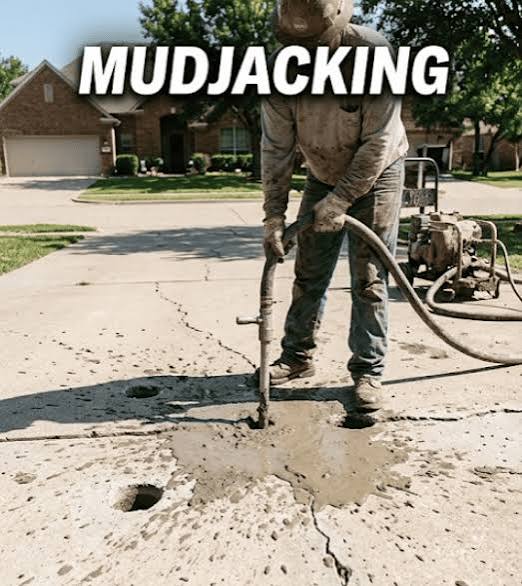
Small holes are drilled into the sunken slab. Cement slurry is pumped beneath to fill voids and raise the slab. After injection, the slab cures for 4 to 6 hours before use. The holes are patched to match the concrete surface.
Mudjacking vs polyurethane foam — which lasts longer?
Polyurethane foam generally lasts longer due to minimal shrinkage and water resistance. Mudjacking slurry can shrink up to 5% and may settle faster, especially in unstable soils. Foam lifts often maintain slab height for over 3 years.
Why did my mudjacked sidewalk sink again?
Repeat sinking after mudjacking often occurs if cement slurry shrinks during curing or if soil erosion or shifting continues beneath. Poor drainage and heavy loads worsen this. Address soil stability and drainage before lifting to reduce resettling.
How much does mudjacking a sidewalk slab cost in 2026?
Mudjacking a typical 5×5 ft sidewalk slab costs between $350 and $600 in 2026, depending on location, slab condition, and contractor rates. Larger or complex jobs cost more. For precise pricing, check how much mudjacking cost resources.
What is the bottom line?
Choose mudjacking for large, heavy sidewalk slabs on stable soil when budget matters and several hours of downtime is acceptable. Choose slabjacking with polyurethane foam for fast, precise repairs on smaller sidewalks where speed and durability justify higher costs. Neither method is suitable if slabs are cracked or soil is unstable; in those cases, replacement is safer.
Start by getting local quotes for mudjacking and foam slabjacking on one problematic slab to compare costs and availability. This practical step helps determine the best fit for your sidewalk’s condition and timeline.
Explore other options in Concrete Trip Hazard Repair Methods Compared: Mudjacking vs Grinding vs Replacement (2026 Guide).
See also: concrete trip hazard repair methods compared
See also: when grinding alone won’t fix a trip hazard
See also: how much does mudjacking cost per square foot in 2
Related: polyurethane foam leveling vs mudjacking cost and durability
Related: how much does mudjacking cost per square foot in 2
Related: self-leveling concrete patch vs professional slab