Asphalt wedge ramp vs concrete grinding for ADA trip hazard
At one site, a sidewalk edge rises just enough to catch a toe — 1/4 inch is the line that matters here. Owners and cities have to decide: asphalt wedge ramp or concrete grinding? The answer hinges on surface type, the site itself, and the updated 2026 ADA standards. Choose poorly, and you invite safety problems, expensive do-overs, and compliance penalties.
Try these strategies today and share your results in the comments.
- Asphalt wedge ramp repairs cost between $3 and $6 per square foot and last 1 to 3 years.
- Concrete grinding costs range from $10 to $20 per square foot and lasts 5 to 15 years.
- The ADA requires vertical offsets over 1/4 inch to be corrected for compliance.
- Concrete grinding is endorsed by the U.S. Access Board for permanent ADA accessibility.
- Asphalt ramps often fail quickly in freeze-thaw climates due to cracking and poor bonding.

What are asphalt wedge ramp and concrete grinding in ADA trip hazard repair?
An asphalt wedge ramp is a tapered strip of asphalt placed over a height difference to ease the transition. Think of it as a stopgap, mainly for asphalt pavement. Concrete grinding does the opposite job in a cleaner way: it shaves down lifted concrete slabs, removes the trip edge for good, and creates transitions that meet the 2026 ADA Standards.
The ADA says trip hazards must be fixed so sidewalks stay usable and safe. Both options still have to fit local rules and the realities on the ground, such as surface material and traffic.
Why does choosing the right trip hazard repair method matter?
Your choice changes safety, ADA compliance, and maintenance spending. Pick the wrong repair, and a sidewalk can miss the 2026 ADA Accessibility Guidelines (ADAAG) — which means liability, injuries, and a headache nobody wants.
Picture a temporary asphalt wedge ramp dropped onto concrete in a crowded area. It starts to break down quickly and creates a second problem. Asphalt and concrete behave differently under weather and stress, so the repair has to match the surface. Concrete grinding takes specialized gear, but it gives a longer-lasting result that actually holds up.
Miss the difference, and you pay twice. Sometimes three times. Rework, fines, and unsafe walks can follow fast.
What variables determine the best repair method?
Four things decide it: surface material, budget, ADA compliance needs, and expected foot traffic with weather exposure. The table below shows how each factor pushes the decision one way or the other.
| Variable | Low/False Condition → Favors | High/True Condition → Favors |
|---|---|---|
| Surface Material | Predominantly concrete → Concrete grinding | Predominantly asphalt → Asphalt wedge ramp |
| Budget Constraints | Low budget → Asphalt wedge ramp | Higher budget → Concrete grinding |
| ADA Compliance Stringency | Temporary fix acceptable → Asphalt wedge ramp | Permanent compliance required → Concrete grinding |
| Expected Foot Traffic & Weather Exposure | Low traffic, mild climate → Asphalt wedge ramp | High traffic, freeze-thaw cycles → Concrete grinding |
Each factor changes how the repair performs over time, so weigh all four together instead of cherry-picking one. That shortcut bites back.
Who is best suited for asphalt wedge ramp repairs?
Asphalt wedge ramps fit anyone who needs a fast, low-cost, temporary fix on asphalt surfaces. Crews can install them quickly with basic tools, which makes them handy for municipalities or property managers who need to knock down a hazard right away.
They blend well with asphalt sidewalks. But they usually fail within 1-2 years under heavy use or freeze-thaw conditions because bonding is weak and the materials expand differently. They also need frequent upkeep, so they make the most sense in low to moderate traffic areas where a permanent repair will come later.
Put simply, they handle temporary ADA trip hazard fixes in 2026 and can pass short-term inspections when installed correctly.
Who benefits most from concrete grinding for trip hazards?
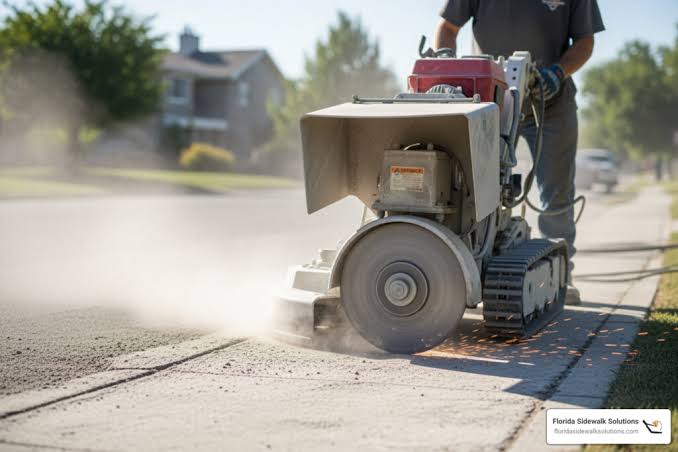
Concrete grinding is for owners who want a permanent fix on concrete sidewalks. Contractors use diamond grinding machines to shave down raised slabs or bevel the edge, which leaves a smooth, ADA-compliant transition without replacing the concrete.
This approach lasts, and it needs little maintenance. It also handles heavy pedestrian and wheelchair traffic well. It meets or exceeds the 2026 ADA Standards, and the U.S. Access Board backs it for permanent accessibility.
There is a trade-off, of course. Grinding requires specialized equipment, costs more up front, and produces noise and dust that crews have to control. It also does nothing for asphalt or for badly cracked slabs that need replacement. Still, for long-term safety, appearance, and legal compliance on concrete, it’s the stronger hand.
How do asphalt wedge ramps and concrete grinding compare side-by-side?
Asphalt wedge ramps win on speed and cost. Concrete grinding wins on durability and compliance. The table below breaks each point down and shows which method comes out ahead under specific conditions.
| Criteria | Asphalt Wedge Ramp | Concrete Grinding | Winner Under Which Conditions |
|---|---|---|---|
| Material Compatibility | Best on asphalt surfaces | Best on concrete surfaces | Asphalt surface → Asphalt wedge ramp; concrete surface → Grinding |
| Installation Time | Hours | 1–2 days (equipment setup + grinding) | Need fast fix → Asphalt wedge ramp |
| Cost (per square foot) | $3–$6 | $10–$20 | Low budget → Asphalt wedge ramp |
| Durability | 1–3 years | 5–15 years | Long-term fix → Concrete grinding |
| ADA Compliance (2026 Standards) | Temporary compliance, limited | Full compliance | Permanent ADA compliance → Concrete grinding |
| Maintenance | Frequent repairs needed | Minimal maintenance | Prefer low maintenance → Concrete grinding |
| Weather Resistance | Poor in freeze-thaw zones | Excellent in all climates | Cold climates → Concrete grinding |
| Equipment Needs | Basic tools | Specialized grinding machines | DIY or low equipment access → Asphalt wedge ramp |
What is the clear recommendation for ADA trip hazard repair in 2026?
Go with an asphalt wedge ramp for a quick, low-cost, temporary repair on asphalt when a permanent fix is coming soon. It fits moderate-traffic spots with mild weather, where temporary ADA compliance is enough.
Choose concrete grinding for a durable, permanent repair on concrete sidewalks. It meets or exceeds the 2026 ADA standards, holds up under heavy foot traffic, and stays solid in harsh climates. It suits owners who care about long-term safety and compliance and have the budget to back that up.
Match the method to surface type, budget, and compliance, and you avoid unsafe conditions and expensive mistakes.
When do exceptions change the usual repair choice?
Some sites do not fit the neat rule. On mixed asphalt-and-concrete sidewalks with minor concrete heaving, asphalt wedge ramps can serve as transition patches where grinding cannot address the asphalt sections.
Also, if the trip hazard is less than 1/4 inch, grinding may not be needed at all, and an asphalt wedge ramp gives a faster fix.
For emergency work before a public event, asphalt wedge ramps go down fastest, temporary nature and all.
When slabs are badly cracked or heaved beyond what grinding can handle, neither option works, so full slab replacement becomes the answer, as detailed in should I repair or replace a heaved driveway slab.
Frequently asked questions about asphalt wedge ramp vs concrete grinding for ADA trip hazard
What is an asphalt wedge ramp trip hazard fix?
An asphalt wedge ramp trip hazard fix places a tapered layer of asphalt over a raised slab edge or crack to create a smooth transition. Crews use it as a temporary solution on asphalt sidewalks to reduce tripping risks and improve ADA accessibility. It typically lasts 1-3 years depending on traffic and weather.
How do you install a temporary asphalt trip hazard ramp?
First, clean the area and apply a tack coat for adhesion. Then place and shape hot or cold mix asphalt into a smooth wedge, and finally compact and cure it. The process usually takes a few hours and needs only basic paving tools.
Asphalt wedge vs concrete grind — which is ADA compliant?
Concrete grinding generally provides full ADA compliance because it permanently removes vertical trip hazards and creates smooth transitions per 2026 standards. Asphalt wedge ramps offer temporary compliance, but they may fail under heavy use or weather, which makes them less reliable for permanent ADA compliance.
Why do asphalt trip hazard ramps fail quickly?
Asphalt ramps fail quickly because of poor bonding with concrete, differential expansion, freeze-thaw cycles, and heavy traffic. These forces cause cracking, crumbling, and settling, especially in climates with big temperature swings.
How much does an asphalt wedge repair cost?
Asphalt wedge repairs typically cost between $3 and $6 per square foot. That is generally lower than concrete grinding, which costs $10 to $20 per square foot because of its specialized equipment and labor.
Which method lasts longer: asphalt wedge ramp or concrete grinding?
Concrete grinding lasts much longer, typically 5 to 15 years, and provides a permanent fix. Asphalt wedge ramps last 1 to 3 years and serve mainly as temporary or budget-conscious solutions.
According to the U.S. Access Board, the Portland Cement Association, and ASTM International, concrete grinding meets 2026 ADA trip hazard standards with durability and full compliance. Asphalt wedge ramps are faster and cheaper, but they often fall short under heavy use. The ADA requires crews to correct vertical offsets over 1/4 inch, which shapes the method choice.
Key takeaways: asphalt wedge ramp vs concrete grinding for ADA trip hazard in 2026
- Concrete grinding is the permanent, ADA-compliant solution for concrete sidewalks, with high durability and minimal maintenance.
- Asphalt wedge ramps deliver fast, cost-effective temporary fixes for asphalt surfaces and mild climates but need frequent upkeep.
- The right method depends on surface type, budget, ADA compliance needs, traffic volume, and weather exposure.
The decision comes down to site-specific conditions, so look at them closely. Concrete grinding protects safety and saves money over time on concrete, while asphalt wedge ramps cover temporary fixes on asphalt. For full guidance on concrete trip hazard repair, including when to replace slabs, visit Concrete Trip Hazard Repair Methods Compared: Mudjacking vs Grinding vs Replacement (2026 Guide). Try these strategies today and share your results in the comments.
Related: concrete trip hazard repair methods compared
Related: mudjacking cost per slab
Related: concrete grinding vs full slab replacement for trip hazard
Related: polyjacking cost 2026
Related: asphalt wedge ramp vs concrete grinding for ADA tr
See also: asphalt wedge ramp vs concrete grinding for ADA tr
See also: concrete trip hazard repair methods compared
See also: step by step photos of concrete grinding a trip ha