“`html
Self-leveling concrete patch vs professional slab lifting: 2026 comparison
Self-leveling concrete patch vs professional slab lifting is the most common decision when a sidewalk slab settles, a driveway edge dips, or a trip hazard starts to form. A $60 bag of patch may look like the easy answer, while a contractor quote of $1,200 to lift the whole slab feels steep. In 2026, clearer formulas and pricing make it simpler to match the repair to the problem. Choosing the right method saves money, prevents repeat repairs, and keeps walkways safe for years. This guide explains which option fits your crack, dip, or heave.
- Slab lifting typically lasts 20+ years; self-leveling patches last 5-10 years (National Concrete Repair Association).
- Professional slab lifting costs $10 to $25 per square foot in 2026.
- DIY concrete patch kits cost under $100 for small areas, covering up to 50 sq ft at 1/8 inch thickness.
- Offsets under 1 inch suit a patch; offsets over 1.5 inches usually need slab lifting.
- Polyurethane foam can raise slabs by up to 4 inches (Polyurethane Foam Association).
What is a self-leveling concrete patch vs professional slab lifting?
A self-leveling concrete patch is a polymer-modified cement mix you pour over a dip. It flows into the low spot and cures in about a day, making it best for minor problems under an inch. Professional slab lifting, by contrast, pumps expanding foam under the sunken slab, physically pushing it back up and stabilizing the base. Because the two methods work so differently, weighing their cost, lifespan, and lift capacity side by side is the logical next step.
Self-leveling concrete patch vs professional slab lifting compares two common trip hazard repairs. A patch uses a polymer-modified mix that spreads to smooth surfaces. Slab lifting injects foam beneath the slab to raise and stabilize it. According to the National Concrete Repair Association, slab lifting lasts 20+ years, while patches last 5-10 years.
How do the two methods compare on cost and lifespan?
A self-leveling concrete patch costs less up front but usually needs redoing within a decade, while professional slab lifting costs more initially yet lasts far longer on residential slabs. A 100 sq ft sidewalk lift might run $1,500, whereas patches could cost $300 now and another $300 in six years. That gap widens when the hazard is likely to recur, as the sidewalk trip hazard repair cost guide shows.
| Factor | Self-leveling patch | Professional slab lifting |
|---|---|---|
| Best for offset | Under 1 inch | Over 1.5 inches |
| Cost | Under $100 DIY kit | $10-$25 per sq ft |
| Lifespan | 5-10 years | 20+ years |
| Cure time | 24-48 hours | Ready in hours |
| Method | Poured cement mix | Injected foam |
| Max lift | 1/2 inch per layer | Up to 4 inches |
| Who does it | DIY-friendly | Licensed contractor |
With those numbers in hand, here is who each option suits, what this guide covers, and when you should step back and call a pro.
What does this guide cover?
This guide compares self-leveling concrete patch and professional slab lifting for typical sidewalk and driveway trip hazards. It does not cover grinding, full replacement, or structural foundation problems, which require licensed professionals. For cracked slabs, heaving over 3 inches, or soil subsidence, get a professional evaluation instead.
Who should consider a patch or professional slab lifting?
A self-leveling concrete patch fits adults with moderate repair experience and the right tools. It is the budget pick for offsets under 1 inch. Larger or unstable slabs need professional slab lifting instead, especially when the damage goes beyond cosmetic. Avoid DIY work if you lack experience, tools, or physical ability, and call an engineer or foundation specialist for severe soil issues.
How to repair concrete trip hazards: step-by-step
For a self-leveling concrete patch, measure the offset first. If it is under 1 inch, clean the concrete with a pressure washer or wire brush, let it dry fully, then mix the compound per the maker’s guide. Pour it onto low spots, spread it 1/8 to 1/2 inch thick with a gauge rake, and work fast—it sets in 20-30 minutes. Allow 24-48 hours to cure before foot traffic.
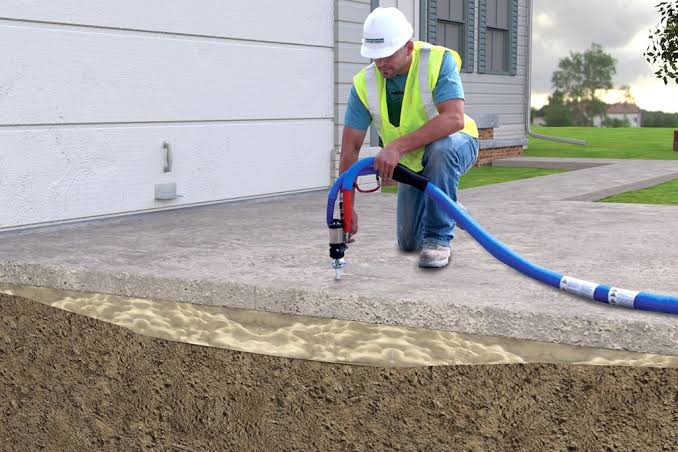
For professional slab lifting, a licensed contractor drills a grid of 5/8-inch injection ports 12-18 inches apart through the slab to the soil. They pump expanding polyurethane foam through the ports, which raises the slab back to level. The contractor monitors the lift carefully, stops if cracks widen, then fills the holes and seals the edges. Most lifted slabs are ready for use within hours.
When should you not use a patch or slab lifting?
Skip both methods when slab cracks exceed 1/4 inch, soil erosion or active subsidence sits under the slab, offsets exceed 3 inches, poor drainage surrounds the slab, or the slab is visibly unstable. In these cases, full replacement or a structural repair is the safer path. Most concrete trip hazard repair failures trace back to poor preparation or choosing the wrong method—issues that are easy to prevent with proper planning.
How do you handle edge cases?
Cold weather calls for antifreeze additives in patches and heated foam for lifting. Multiple offsets are best handled by combining grinding and slab lifting rather than patching alone. Decorative concrete benefits from color-matched patches or minimal-invasion lifting. If the slab still shows major movement or repeated cracking, a licensed expert should take over—especially when structural testing or a long-term stabilization plan is needed.
When should a licensed professional step in?
Call an engineer or foundation specialist when offsets exceed 3 inches, cracking is widespread, or soil looks unstable. Certified slab lifting contractors use specialized gear and follow ASTM International standards. Bring detailed measurements and repair history to the consult. Ignoring pro advice in complex cases risks injury, damage, and higher costs.
Frequently asked questions about self-leveling concrete patch vs professional slab lifting
What is a self-leveling concrete patch and how does it work?
A self-leveling concrete patch is a polymer-modified cement mix that flows and smooths uneven concrete. It cures within 24 hours and repairs minor dips or trip hazards under 1 inch. It is designed for quick surface leveling rather than structural correction.
How do you apply a self-leveling patch to a sidewalk safely?
Clean and dry the surface first. Mix the compound per the maker’s guide, then apply the mixture to low areas and smooth it with a gauge rake or trowel. Allow 24-48 hours to cure before foot traffic. Avoid work below 50°F or on damp concrete.
DIY concrete patch vs professional slab lifting — which is safer?
DIY patching is safe for minor repairs under 1 inch when you follow the steps. Professional slab lifting needs drilling and foam injection with special gear, so licensed contractors should handle offsets over 1.5 inches. Professional slab lifting is safer for bigger hazards.
Why did my concrete patch crack and lift again after repair?
Failures come from poor surface prep, moisture, soil movement, weak materials, or excessive thickness. These conditions block proper bonding, so cracks or lifting return.
How much does a DIY concrete patch kit cost in 2026?
DIY kits like self-leveling underlayment cost $30-$80 for 25-pound bags. Each bag covers up to 50 square feet at 1/8 inch thickness. Tools and prep add to the total. These kits stay cheaper than professional slab lifting, which averages $10-$25 per square foot.
When is professional slab lifting the better option?
Choose professional slab lifting for offsets over 1.5 inches, unstable or cracked slabs, or when soil needs stabilizing. It restores slab height and strength and lasts longer than a patch for serious trip hazards.
According to the National Concrete Repair Association, ASTM International, and the Polyurethane Foam Association, a self-leveling concrete patch handles minor surface flaws well, while professional slab lifting can raise slabs by up to 4 inches. The average slab lifting cost in 2026 is $10-$25 per square foot, based on US material and labor rates.
Key takeaways: self-leveling concrete patch vs professional slab lifting in 2026
- A self-leveling concrete patch offers a fast, affordable fix for offsets under 1 inch and lasts 5-10 years.
- Professional slab lifting raises offsets over 1.5 inches with polyurethane foam and lasts 20+ years.
- Accurate measurement, clean prep, and ASTM standards make either repair last.
Your choice comes down to hazard severity, site conditions, and budget. Better materials in 2026 make both a self-leveling concrete patch and professional slab lifting effective when applied correctly. Always verify soil stability and slab condition first. For full details, see the complete concrete trip hazard repair guide.
For the complete guide, read: Concrete Trip Hazard Repair Methods Compared: Mudjacking vs Grinding vs Replacement (2026 Guide)
Related: sidewalk trip hazard repair cost
Related: sidewalk grinding cost
“`
See also: self-leveling concrete patch vs professional slab
See also: concrete grinding vs full slab replacement for tri
See also: concrete trip hazard repair visual guide